History of the Lord Mayor’s Show History of the Pageantmaster
Some 450 years ago the names of those responsible for creating the Lord Mayor’s Show began to appear in the records of the City’s Livery Companies.
In 1556 John Leedes was asked to build a “decent and comely pageant” for Sir Thomas White. And we know that Richard Baker was responsible for the Show in 1566, and that he was succeeded in the role by his son Peter.
These men were poets or artificers. They wrote the script for the pageant or they created its props and costumes. The Show was then spoken like a medieval mystery play, and the role became known as ‘City Poet’. There were some famous City Poets including Thomas Dekker, Anthony Munday and Thomas Middleton and even an unsuccessful attempt by Ben Jonson.
The last spoken Lord Mayor’s Show was performed in 1702, when Elkanah Settle wrote the Show for the Vintner’s Company. Settle was a complex and ultimately unsuccessful character who ended his days performing inside a green leather dragon costume. Alexander Pope put the couplet in his mouth:
The Corporation refused to recognise the title City Poet and so it fell into disuse.
Today the Pageantmaster is responsible for every aspect of the design and production of the Lord Mayor’s Show. This ancient and well-loved London celebration is a platform for good citizenship. It is made up of over 150 different elements ranging from dramatic floats, to military bands and marching detachments, to horses and carriages and the Lord Mayor’s gilded State Coach itself. The participants are drawn from all walks of life and number some 7000 on the day of the Show. This temporary community is marshalled into an orderly procession and delivered with split-second accuracy to an audience watching it on the street and live on television. It is has been broadcast since 1937, making it the longest running television programme in the world.
A great deal of work goes into the planning process. Modern attitudes to safety, security and risk have made effective liaison with a wide variety of agencies more important than ever. But the job is also an interpretive one. The Ceremonial Handbook of the Corporation of London states that:
“Ceremonies are not idle forms or shows, put on merely for entertainment. They ensure that things are done with dignity and in good order. More than this: they embody and make visible rights and privileges… If however ceremonies are to make their full impact it is vital that the reason why they are performed should be clearly understood. Without such understanding, ceremonial tends to be regarded merely as a traditional form of behaviour or a piece of pageantry.”
The job of the Pageantmaster is therefore above all to create a series of elegantly linked ceremonies that are both legible to the onlooker and which confer dignity upon the participant. They must also answer the requirements of the City of London (Various Powers) Act of 1959 for the Lord Mayor to swear an oath of loyalty to the Sovereign on the second Saturday in November in every year.
Ceremonies have a language and a syntax all of their own which are deeply embedded in the national psyche. Any dissonance is easily picked up by the audience who would soon lose interest in something which made no sense. And so the opportunity exists for the Pageantmaster to interpret and craft the procession and each moment surrounding it with a latitude which does not exist within State Ceremonial. Therein lies the challenge and the excitement of the job.
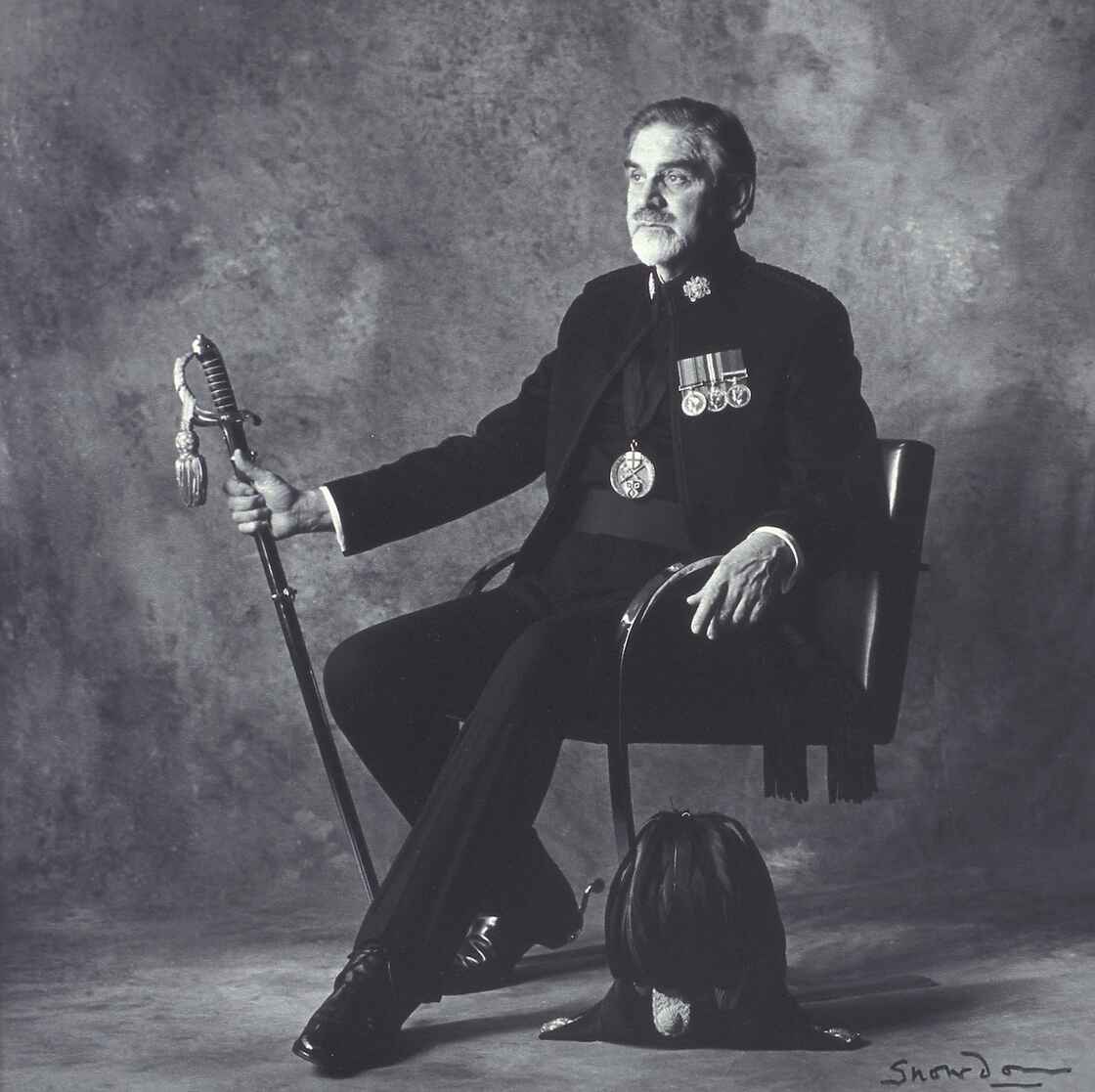
My father, John Reid, produced twenty Shows between 1972 and 1991 and held the record for tenure of the post of Pageantmaster until it fell to me in 2012. He was responsible for rescuing the Show from the parlous state into which it had fallen. On his death in 1992 the City saw fit to add to the many rich traditions surrounding the Show by naming a street off Ludgate Hill “Pageantmaster Court” in recognition of the service he gave to the City. And so, each November the Lord Mayor’s Show passes this monument to those who have brought it into being.